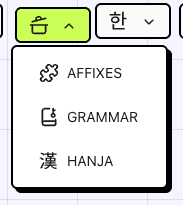
It's practically a right of passage for Korean learners at this point. You look at the word 물개(seal) and suddenly it hits you like a twenty-ton truck, this is a compound word: 물(water) + 개(dog). A water dog! Once you've seen that you can't unsee it, and you'll never need a flashcard for 물개 again. Korean is absolutely full of words like this, and today we're giving those building blocks their own home in the app: a new Ingredients menu in the navigation, with three reference pages — Affixes, Grammar, and Hanja.
Why Bother With Word Parts?
For starters, over half of Korean vocabulary is built from Sino-Korean (Chinese) character roots called 개(hanja), and these roots recombine constantly. Learn that 水 (수) means water and you've pre-learned a piece of 수영(swimming), 수박(watermelon), 호수(lake), and dozens more. It works just like Latin and Greek roots in English. Once you know aqua- "aqueduct" and "aquarium" pretty much explain themselves.
Native-Korean affixes work similarly but aren't based in Chinese characters. Check these out:
새- makes color words vivid: 새까맣다(pitch black), 새하얗다(snow white). -꾼 marks a person who does something habitually: 일꾼(worker), 사기꾼(con artist). 날- means raw: 날달걀(raw egg). Need I go on?
Okay, but do I really need reference pages for this? Need is a strong word. But a word you can take apart is a word with hooks in your memory — "물개 = water dog" sticks after one exposure because it's a tiny story instead of a sound you have to brute-force. That's why so many of our mnemonics are simply the word's real ingredients; the etymology is the mnemonic. And when you do forget a word, the parts give you a path back: you can reconstruct the meaning instead of drawing a blank.
The Three Pages
Affixes
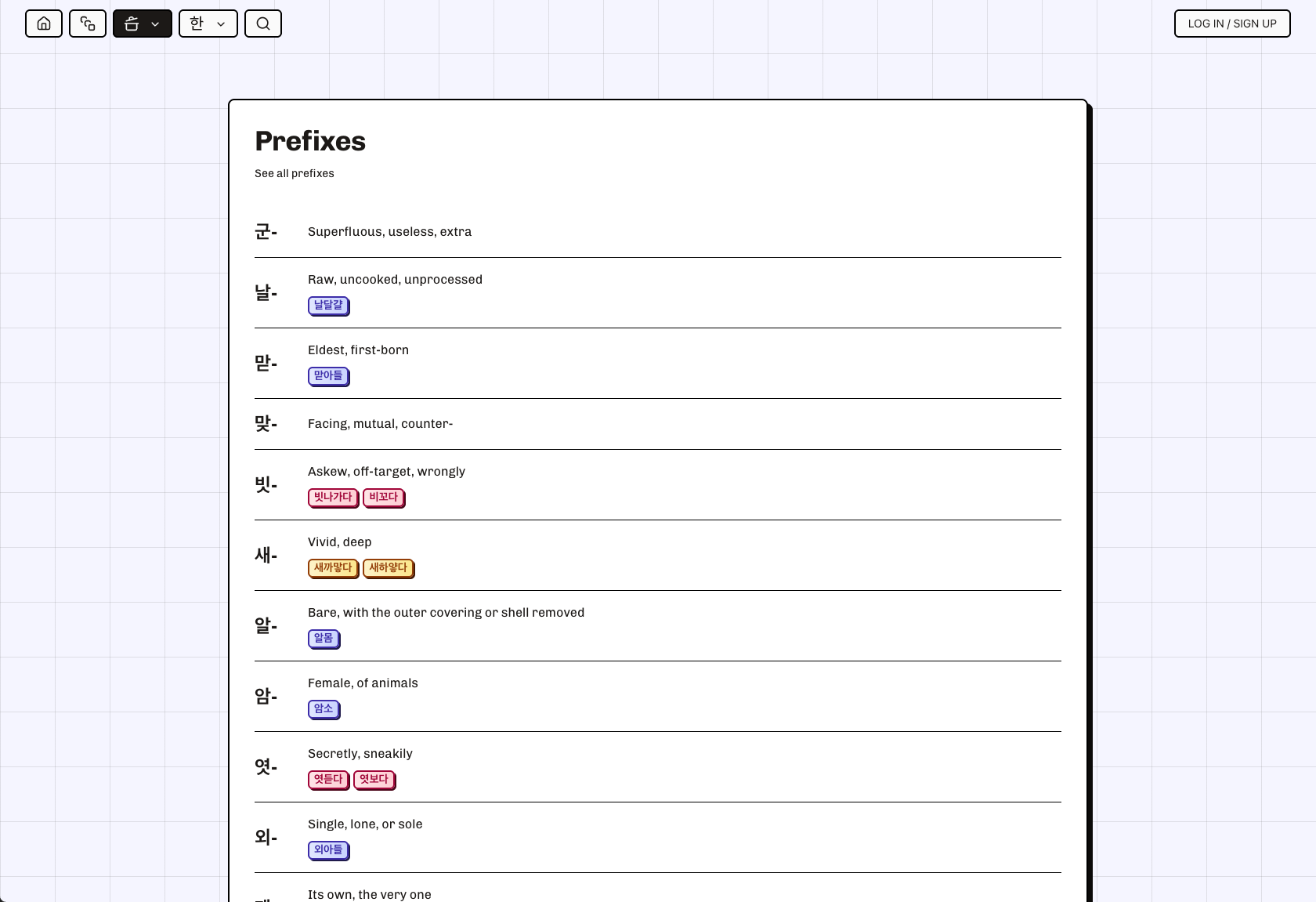
Our curated table of native-Korean prefixes and suffixes, each with a plain-English gloss and real example words from the vocabulary, rendered as tappable word cards. Every affix is real morphology recognized by the National Institute of the Korean Language. These are the same affixes you'll see as hoverable badges inside mnemonics throughout the app.
Grammar
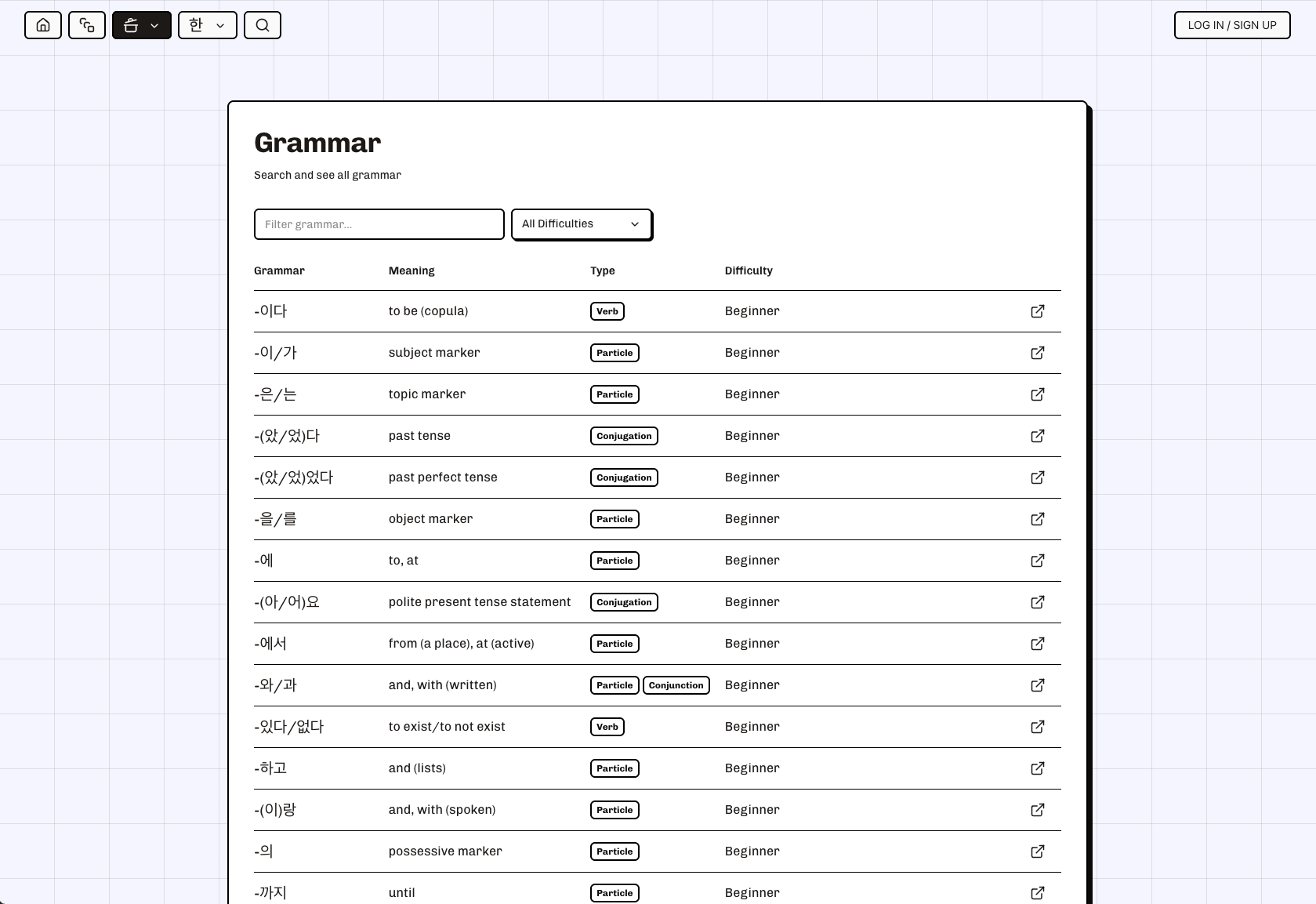
The grammar reference you may already know, now one tap away from anywhere: 200+ particles, endings, and patterns, searchable and filterable by difficulty, with audio and detail pages.
Hanja
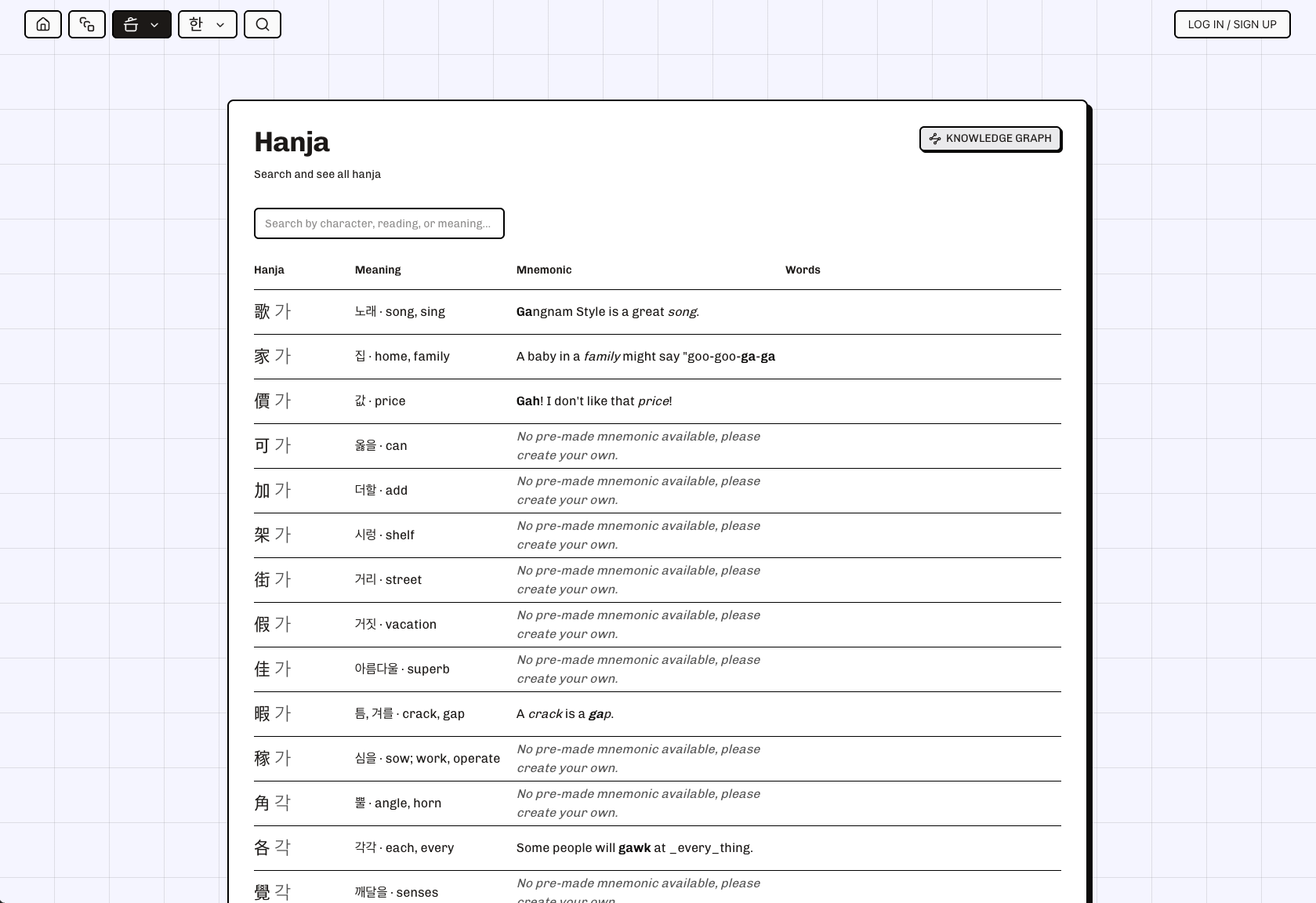
For the first time, our full hanja reference is public: around 2,000 characters, searchable by character, reading, or meaning. Each entry shows the Korean reading, the traditional 훈 gloss, a sound-alike mnemonic, and — my favorite part — the actual vocabulary words built from that character, as word cards you can tap into. Look up one character and you get its whole word family at once.
How to Actually Use This
Take careful note: you do not need to sit down and study these pages front to back. Instead:
- When you meet a new word, peek at its parts. If the mnemonic shows ingredient badges, tap them — you're pre-learning that word's siblings.
- When a part keeps showing up, look it up. Seen
-거리다 three times this week? The Affixes page will tell you what it's doing everywhere at once.
- Let hanja families guide your review. After learning 시간(time), skim 時 (시)'s family on the Hanja page. Words you half-know have a way of snapping into place when you see the shared root.
The vocabulary deck teaches you words; Ingredients teaches you why the words are what they are. Give it a little time and you'll catch new words explaining themselves before you've even looked them up. You'll find it in the top navigation — look for the cooking pot.
Happy studying!