From the team
What's New: Summer 2026
Updated August 10, 2026

Word ingredients, two thousand new vocabulary, and a multitude of fixes and improvements to help you beat the heat!
Word ingredients, two thousand new vocabulary, and a multitude of fixes and improvements to help you beat the heat!
Summer is here and already winding down, so let me catch you up on what landed in The Korean Vocabulary App over the last few months. Most of it comes back to one idea: Korean words are built out of parts, and they get a lot easier to learn once you can see the parts.
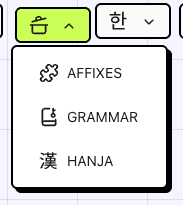
There's a new ingredients menu in the navigation now (with a cooking pot icon) with three pages inside: Affixes, Hanja, and Grammar. It's the biggest thing on this list, which is why it isn't on this list: it got a whole post of its own. Go read Introducing Ingredients and then come back for the smaller stuff.
The word list itself grew — a lot. Roughly 2,000 words were added over the summer, bringing the app to 8,575 in total. The new entries push well past where the old list stopped, into the lower-frequency territory you need for reading news and books: the vocabulary that separates "I can order food" from "I can argue about politics."
The hanja reference grew right alongside — it now covers 1,978 characters, wired into the words that use them through more than 10,000 character-to-word links. That's what powers the hanja you see above quiz words and the Hanja page.
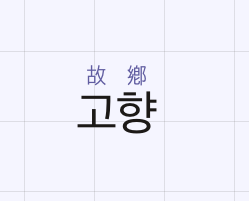
About 5,000 of the words in the app are hanja-based, and now it's easier to associate the sound with the character. In the quiz, the hanja characters are now printed directly above the syllables they belong to.
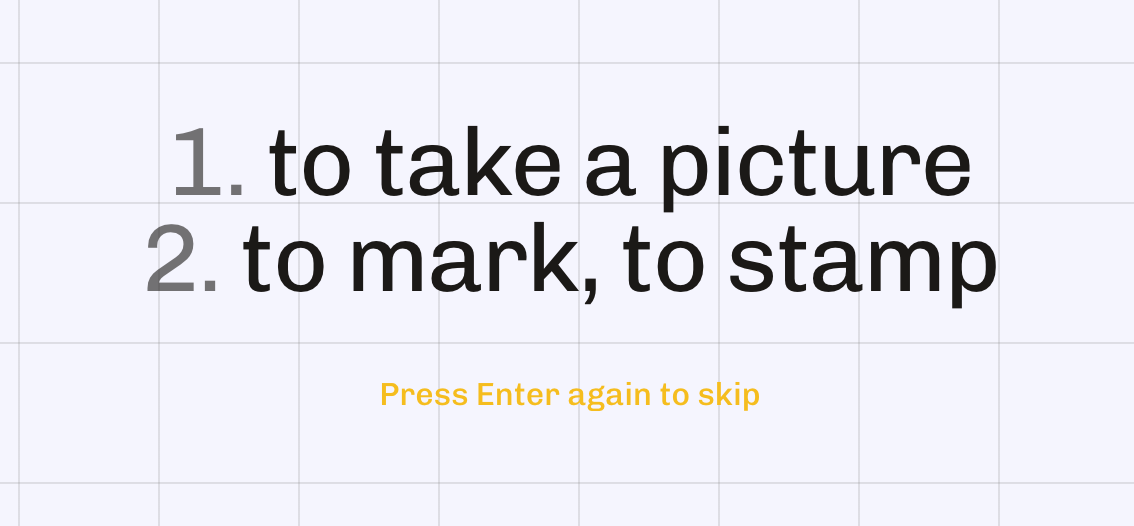
Sometimes the prompt comes up and there is simply nothing in the tank. You used to have to type some sacrificial wrong answer just to move on. Now press Enter on an empty answer and the Enter key turns into Skip — press it again to confirm. On the on-screen keyboard it's a proper "Don't know" key. A skipped word still counts as a miss, so it comes back around sooner, which is exactly what you want for a word you couldn't summon.
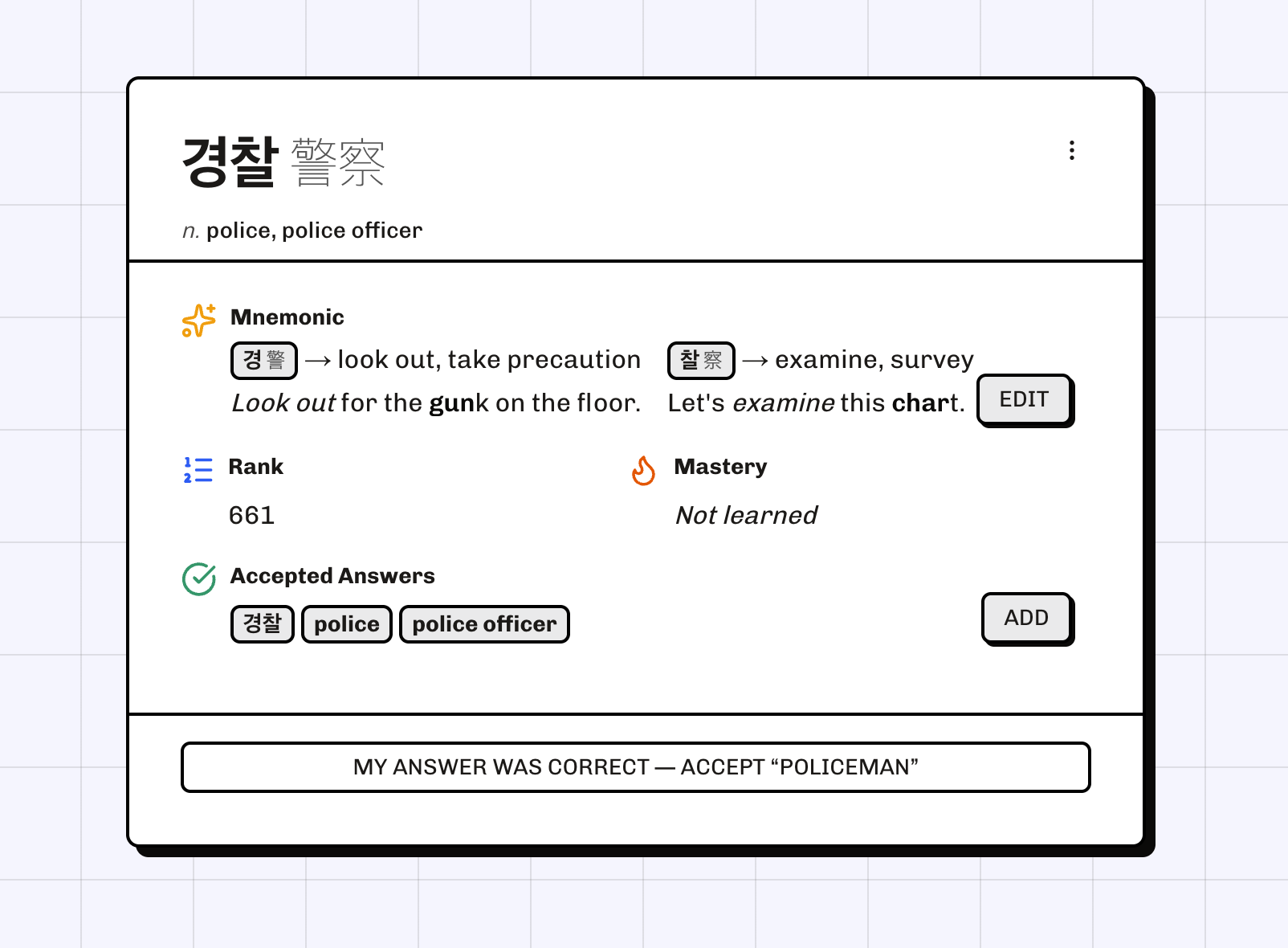
Every so often you type an answer that's perfectly correct and the quiz marks it wrong, because that particular translation isn't in the accepted answer list. That used to be quietly infuriating. Now the word card offers a button: My answer was correct. Press it and the miss is erased — the penalty is discarded, the review is recorded as correct, and your answer joins your custom accepted answers list so it's accepted from then on. Couldn't I just mark everything correct? You could! You'd also be lying to a scheduler whose entire job is to help you remember things, so I'll leave that between you and your conscience.
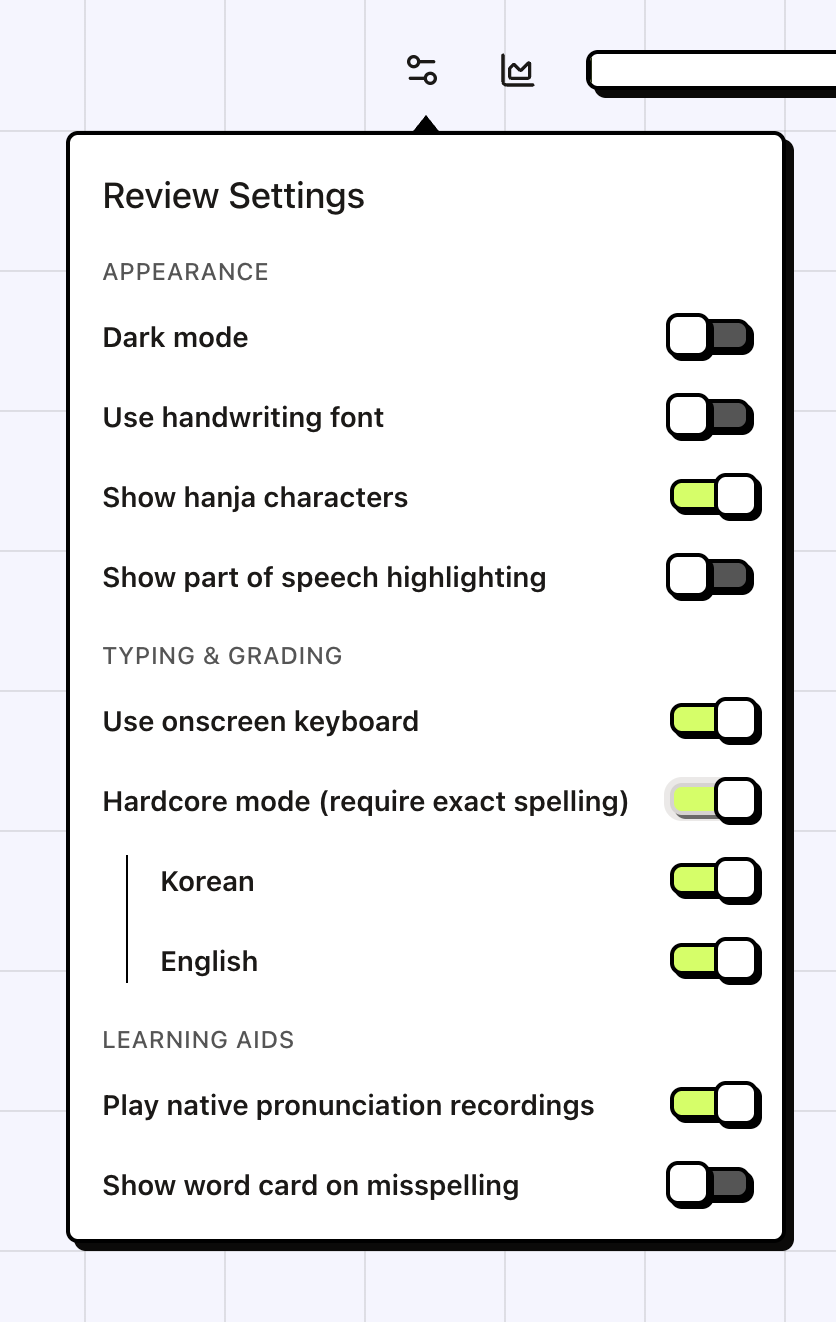
The quiz normally forgives a one-letter slip. Hardcore mode requires exact spelling and turns that forgiveness off. Now you can separate Korean and English toggles under the main switch. Being strict about Korean spelling while staying relaxed about whether you typed "happiness" or "happines" is a perfectly sensible place to land.
And if spelling is where you wobble, the Show word card on misspelling toggle pairs nicely with all of this — a near-miss brings up the full word card so the correct spelling gets a proper look before you move on.
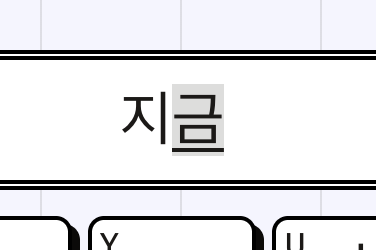
Typing Korean answers while your keyboard is in English now composes the way a real Korean IME does: jamo assemble into syllables as you go, with the in-progress syllable highlighted. Backspace got smarter too — it peels off one jamo at a time instead of vaporizing the whole syllable. If you've ever been three letters into 꿰뚫다 and had to start the syllable over, you know exactly why this matters.
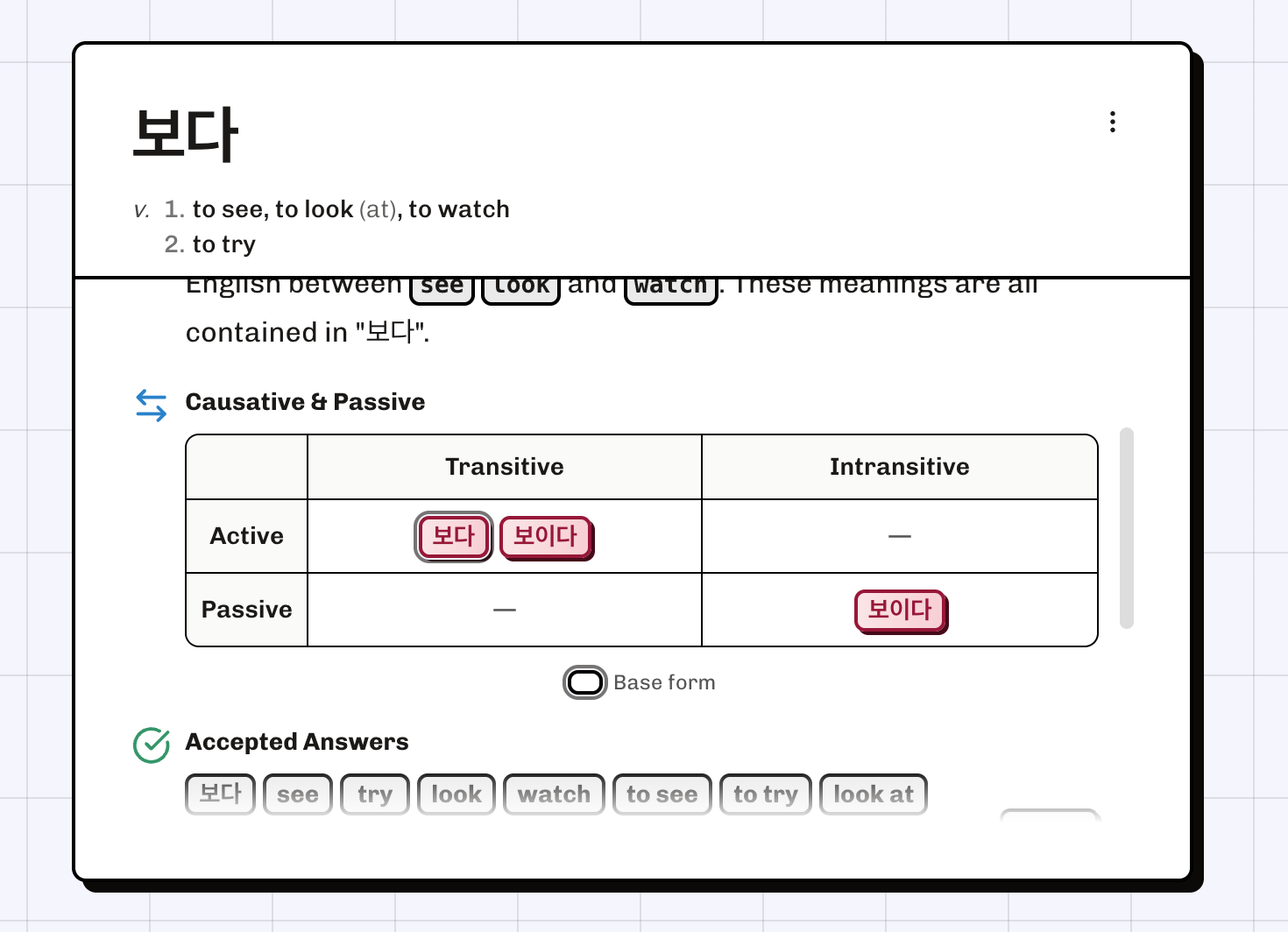
Verb cards now have a new Causative & Passive (사동/피동) section. It's a grid: active and passive down the side, transitive and intransitive across the top.
If you have opted in or recently created an account, your reviews are being scheduled by FSRS instead of the fixed SRS ladder, and new accounts get it by default now. I wrote about that one on its own: Your Reviews Are About to Get Smarter.
The Ingredients pages are the ones I'd start with, especially if you've been learning words as flat little units — seeing that 始 (시) shows up in dozens of words you already know is a genuinely nice feeling.
이번 여름이 많이 덥죠?! 밖에 나가지 말고 안에서 시원하게 한국어 공부나 하세요!